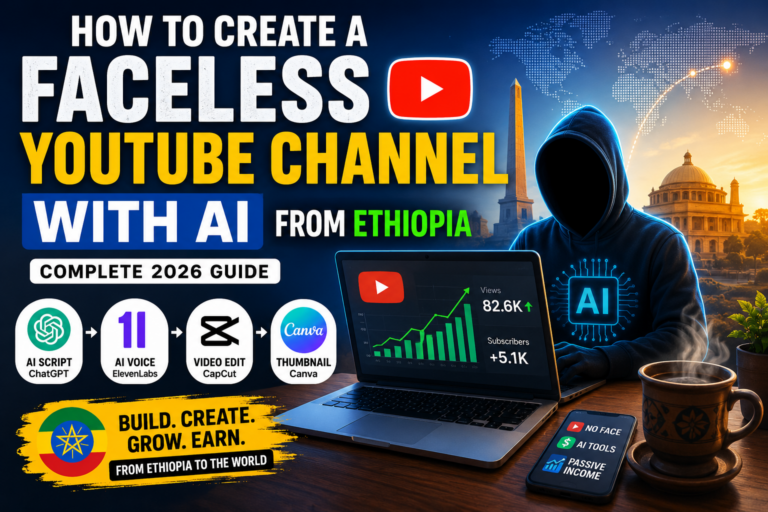
How I Made $10,000/Month Using YouTube Automation and AI

How I Made $10,000/Month Using YouTube Automation and AI

The internet has changed dramatically over the last few years, but one opportunity continues to grow faster than ever: YouTube automation powered by Artificial Intelligence.

What once required a full production team can now be done with AI tools, smart systems, and a scalable content strategy. Today, creators are building entire YouTube businesses without showing their faces, recording with expensive cameras, or editing videos manually for hours.

In this article, I’ll break down how YouTube automation works, the AI tools behind it, and the exact strategy that helped generate consistent monthly income online.


What Is YouTube Automation?

YouTube automation is a content business model where most of the video creation process is outsourced, automated, or handled using AI tools.

Instead of filming yourself every day, you build systems that handle:

  • Script writing
  • Voiceovers
  • Video editing
  • Thumbnail creation
  • SEO optimization
  • Publishing workflows

This allows creators to scale multiple channels efficiently.

The goal is simple:

Build content assets that continue generating views, traffic, and revenue over time.


Why AI Changed Everything

Before AI, running automated YouTube channels required:

  • Large teams
  • Expensive editors
  • Voice actors
  • Designers
  • Long production timelines

Today, AI tools can handle most of those tasks in minutes.

AI dramatically reduces:

  • Production cost
  • Editing time
  • Content research effort
  • Script creation workload

This means creators can publish more content faster while maintaining quality.


My YouTube Automation Strategy

The biggest mistake beginners make is creating random videos without a clear strategy.

Instead of chasing trends blindly, I focused on three things:

  1. Evergreen content
  2. High CPM niches
  3. Scalable AI workflows

That combination changed everything.


Step 1: Choosing the Right Niche

Not all YouTube niches make the same amount of money.

Some niches attract advertisers willing to pay significantly more because the audience has buying power.

High-Income YouTube Niches

  • Artificial Intelligence
  • Finance
  • Online Business
  • Technology
  • Software Tutorials
  • Productivity
  • Investing
  • Digital Marketing

I focused on AI and technology because:

  • The search demand was exploding
  • AI topics trend constantly
  • CPM rates are high
  • Affiliate opportunities are massive

This created multiple income streams beyond YouTube ads.


Step 2: Using AI for Content Research

Finding good video ideas is one of the hardest parts of YouTube growth.

Instead of guessing, I used AI tools to analyze:

  • Trending searches
  • Viral titles
  • Competitor channels
  • Viewer questions
  • Reddit discussions
  • Google Trends

AI helped identify:

  • What people were searching for
  • What titles generated clicks
  • What content had monetization potential

This allowed me to create videos based on demand rather than assumptions.


Step 3: AI Script Writing

Writing scripts manually for daily uploads becomes exhausting.

AI tools helped speed up:

  • Research
  • Outlines
  • Hooks
  • Story structure
  • Video pacing

A typical workflow looked like this:

  1. Generate topic ideas
  2. Create video outline
  3. Expand into full script
  4. Human editing and polishing
  5. Add storytelling and engagement

The secret was not copying AI outputs directly.

The best-performing scripts combined:

  • AI speed
  • Human creativity
  • Emotional storytelling

Step 4: AI Voiceovers

Faceless channels became much easier after AI voice technology improved.

Modern AI voice tools now sound:

  • Natural
  • Professional
  • Human-like

This removed the need for:

  • Expensive microphones
  • Recording studios
  • Voice actors

The result:
Faster production and scalable uploads.


Step 5: Automating Video Editing

Editing used to consume most of the production time.

AI editing tools now automate:

  • Captions
  • Scene transitions
  • Background music
  • B-roll selection
  • Video pacing
  • Short-form clipping

Instead of spending 10 hours editing a single video, production could be completed much faster.

This allowed consistent uploads — and consistency is one of the biggest drivers of YouTube growth.


Step 6: Thumbnail Optimization

No matter how good a video is, nobody watches if the thumbnail fails.

AI-assisted thumbnail workflows helped:

  • Generate concepts
  • Analyze click-through patterns
  • Improve visual contrast
  • Create emotional triggers

The best thumbnails were:

  • Simple
  • High contrast
  • Emotion-driven
  • Curiosity-focused

A strong thumbnail can completely change a channel’s performance.


Step 7: SEO and Search Traffic

Many creators rely only on the YouTube algorithm.

Instead, I focused heavily on searchable content.

This included:

  • Keyword optimization
  • Search-friendly titles
  • Long-tail keywords
  • Video descriptions
  • Strategic tagging

Search traffic creates long-term passive views because videos continue ranking for months or years.

That means older videos keep generating income long after publishing.


Revenue Streams Beyond AdSense

One of the biggest lessons:
Do not rely only on YouTube ads.

The highest income came from combining multiple monetization methods.

Main Revenue Sources

  • YouTube Ad Revenue
  • Affiliate Marketing
  • Sponsorships
  • Digital Products
  • AI Tool Promotions
  • Course Sales
  • Blog Traffic
  • Consulting

This created a more stable online business.


Biggest Mistakes Beginners Make

Many people fail because they:

  • Upload inconsistently
  • Choose low-paying niches
  • Ignore thumbnails
  • Copy competitors directly
  • Depend only on AI without editing
  • Quit too early

YouTube automation still requires:

  • Strategy
  • Patience
  • Testing
  • Creativity

AI is powerful, but systems and consistency matter more.


The Real Secret to Scaling

The biggest breakthrough came from treating YouTube like a business instead of a hobby.

That means:

  • Tracking analytics
  • Studying audience retention
  • Testing thumbnails
  • Improving storytelling
  • Building workflows
  • Outsourcing repetitive tasks

Once systems are built, scaling becomes much easier.


Can Beginners Still Start in 2026?

Absolutely.

The opportunity is still massive because:

  • AI tools are becoming more accessible
  • Global internet usage keeps growing
  • Video consumption is increasing every year
  • Businesses need digital audiences
  • Educational content is booming

The creators who win now are not necessarily the biggest creators.

They are the most consistent and adaptable.


Final Thoughts

YouTube automation and AI are transforming online business forever.

The barrier to entry has never been lower, but competition has never been higher.

Success now depends on:

  • Smart niche selection
  • Consistent publishing
  • Strong storytelling
  • AI-assisted productivity
  • Long-term thinking

Building a profitable YouTube channel takes time, but with the right systems and AI tools, it is more achievable than ever before.

The future belongs to creators who learn how to combine technology with creativity.

Start small.
Learn fast.
Stay consistent.

Your first successful channel could change your entire financial future.

Tech Layoffs in 2026: How AI Is Reshaping Careers

AI Is Reshaping the Tech Industry: How to Survive Tech Layoffs and Rebuild Your Career in 2026

The technology industry is going through one of its biggest transformations in years. Major companies like Cognizant, Coinbase, and PayPal have announced massive layoffs as businesses rapidly shift toward Artificial Intelligence (AI), automation, and leaner digital operations.

Reports show that more than 90,000 tech employees have already been affected this year alone. At the same time, companies investing heavily in AI are restructuring teams and replacing repetitive roles with automated systems.

This new reality is changing the future of work.

But while layoffs can feel overwhelming, they can also become a turning point for growth, reinvention, and new opportunities. The key is learning how to adapt quickly and strategically.

Here are five powerful ways to survive the current tech layoff wave and position yourself for success in the AI era.


1. Accept the Change Without Losing Confidence

Losing a job can damage your confidence, especially when it disrupts your income, routine, and future plans. However, a layoff does not define your talent, intelligence, or value as a professional.

Many companies are reducing staff because of changing business models and AI-driven restructuring—not because employees lack ability.

Instead of staying stuck in frustration or denial:

  • Accept the situation quickly
  • Give yourself time to process emotions
  • Focus your energy on planning your next move

Your career is bigger than one company or one setback.


2. Upskill for the AI Economy

The same companies cutting jobs are aggressively investing in:

  • Artificial Intelligence
  • Automation
  • Cloud Computing
  • Data Analytics
  • Digital Transformation

This reveals exactly where future opportunities are heading.

To remain competitive, focus on learning high-demand skills such as:

  • Prompt Engineering
  • AI Tools & Automation
  • Data Analysis
  • Cloud Certifications
  • Product Management
  • Cybersecurity
  • No-Code & Low-Code Platforms

In today’s market, continuous learning matters more than static experience.

The professionals who adapt fastest will have the biggest advantage in the next generation of tech careers.


3. Transform Your CV From “Tasks” to “Results”

Most resumes fail because they simply list responsibilities instead of achievements.

Recruiters spend only a few seconds scanning a CV, so your goal is to show measurable impact immediately.

Improve Your Resume By:

  • Writing a strong professional summary
  • Using clear and modern formatting
  • Showing measurable achievements
  • Adding numbers and outcomes

Instead of writing:

“Managed social media accounts”

Write:

“Increased social media engagement by 45% within 6 months using AI-driven content strategies.”

Results attract attention. Duties do not.


4. Focus More on Networking Than Online Applications

Thousands of people apply for jobs online every day, making it difficult to stand out through cold applications alone.

Many opportunities are filled through referrals, recommendations, and internal connections before they are publicly posted.

That is why networking has become one of the most powerful career tools.

Start By:

  • Reconnecting with former colleagues
  • Messaging mentors and industry professionals
  • Engaging on LinkedIn consistently
  • Joining tech communities and events
  • Building genuine professional relationships

Your next opportunity may come from a conversation rather than an application form.


5. Protect Your Mental Health During the Transition

Layoffs can create stress, anxiety, and uncertainty. Constant comparison on social media can make the experience even harder.

Taking care of your mental health is not optional—it is part of career recovery.

Build a Healthy Routine:

  • Wake up at consistent times
  • Exercise regularly
  • Set daily job-search goals
  • Take breaks from social media
  • Prioritize sleep and healthy eating
  • Stay connected with supportive people

A strong mindset helps you make better decisions during difficult periods.


The Future Belongs to Adaptable Professionals

The tech industry is evolving rapidly, and AI is becoming a major force behind that change.

While layoffs are painful, they can also become an opportunity to rebuild stronger skills, explore new industries, and create a more future-proof career path.

The professionals who survive this transition will not necessarily be the smartest or most experienced—they will be the most adaptable.

Keep learning.
Keep networking.
Keep moving forward.

The AI era is not the end of careers.
For many people, it is the beginning of a new one.

Digital Ethiopia 2030: The Lean Canvas Roadmap for Tech Founders

Introduction

There was a time when launching a business meant writing a 50-page document, printing it, binding it, and hoping someone would read it. Today, that approach feels outdated—especially in Ethiopia’s rapidly evolving digital landscape.

With the rise of Digital Ethiopia 2025 and the broader 2030 vision, the barriers to entry for tech startups have dropped dramatically. Mobile penetration is rising, fintech platforms like Telebirr and CBE Birr are mainstream, and universities such as AAU and Haramaya are producing a new generation of tech-driven thinkers.

Today, the landscape has shifted. The Digital Ethiopia 2025/2030 Strategy has fundamentally lowered the barrier to entry. With the expansion of Safaricom and Ethio Telecom, and the explosion of digital payment gateways, the “infrastructure excuse” is evaporating. But a new challenge has emerged: how do you build fast enough to survive in a market that is leapfrogging decades of development in just a few years?

But here’s the reality: speed matters more than perfection.

This is where the Lean Canvas becomes a game changer. Instead of spending months planning, founders can map, test, and refine their ideas in days. For Ethiopian entrepreneurs navigating a fast-changing market, this isn’t just helpful—it’s essential.

The Past vs. Present: From Heavy Plans to Smart Experiments

Traditional business thinking in Ethiopia—and globally—was built on predictability. You researched, wrote, projected, and then executed.

That model struggles in today’s environment.

Old Approach (Analogue Thinking)

  • Long, static business plans
  • Assumptions treated as facts
  • Delayed market entry
  • High upfront investment
  • Minimal customer feedback early on

New Approach (Lean Methodology)

  • One-page business model (Lean Canvas)
  • Assumptions tested quickly
  • Launch fast, iterate faster
  • Build only what users need
  • Continuous feedback loop

For example, a startup in Addis Ababa building a delivery app no longer needs to fully develop the platform before testing. A simple WhatsApp-based MVP (Minimum Viable Product) can validate demand within days.

The shift is clear: learning beats planning.

The 9 Lean Canvas Blocks in an Ethiopian Context

chatgpt image apr 25, 2026, 10 37 43 pm

Let’s break down each block of the Lean Canvas with practical, local examples relevant to Ethiopia’s tech ecosystem.

1. Problem

Start with the “pain.” Don’t list features; list frustrations. In Ethiopia, these are often related to trust, language, or logistics. Start with real pain points—not assumptions.

Ask:

  • What frustrates people daily?
  • What inefficiencies exist in local systems?

Ethiopian Example:

  • Small businesses face difficulty tracking digital payments

2. Customer Segments

Define who experiences the problem.

Examples:

  • Urban youth in Addis using smartphones
  • Rural farmers with limited internet access
  • University students at AAU or Haramaya
  • SMEs adopting digital payments

Avoid “everyone” as a target. Specificity wins.


3. Unique Value Proposition (UVP)

What makes you different? Why should a customer choose you over a traditional method or a competitor? This is your promise—why your solution matters.

It should answer:

  • Why should users care?
  • What makes you different?

Example:

  • “Real-time crop pricing via SMS for Ethiopian farmers”

Keep it clear, bold, and relevant.


4. Solution

What are the top three features that solve the problems you listed? Keep it minimal. If you’re building a delivery app, focus on the delivery, not the fancy animations.

List your top features—not everything.

Example (Afaan Oromo AI Hub concept):

  • Speech-to-text in Afaan Oromo
  • Learning chatbot for students

Example (Fintech app):

  • Telebirr integration
  • Instant payment tracking
  • Expense dashboard

Build only what solves the core problem.


5. Channels

How will you reach your customers? In our market, digital ads are rarely enough

How do you reach users?

In Ethiopia, digital and offline channels both matter.

Effective Channels:

  • Telegram groups (very popular locally)
  • University tech hubs
  • Facebook pages and ads
  • Community events and startup hubs
  • Partnerships with local cooperatives

Don’t ignore grassroots distribution—it’s powerful.


6. Revenue Streams

How will you make money?

Integration is Key: Your Lean Canvas must account for the reality of Telebirr and CBE Birr. If your revenue model depends on international credit cards, your canvas is broken for the local market.

Common Ethiopian Models:

  • Subscription (monthly app access)
  • Transaction fees (e.g., payment services)
  • Freemium (basic free, premium features paid)
  • B2B licensing (selling to institutions)

Example:

  • A fintech app charging a small fee per Telebirr transaction
  • An AI learning platform offering premium courses

7. Cost Structure

What are your “burn” items? Consider the high cost of specialized tech talent and the price of reliable server hosting in a region where connectivity can be inconsistent.

What are your biggest expenses?

Typical Costs:

  • Development (developers, tools)
  • Cloud hosting
  • Marketing and user acquisition
  • Operations and support

Keep costs lean early. Avoid overbuilding.


8. Key Metrics

Forget “vanity metrics” like Facebook likes. What number actually proves your business is alive?

Example: Instead of “Total Downloads,” track “Repeat Transactions” or “Daily Active Users who complete a task.”How do you measure success?

Focus on actionable metrics.

Examples:

  • Daily active users
  • Number of transactions
  • Customer retention rate
  • Cost per acquisition

For instance, if you’re building a delivery app, track:

  • Orders per day
  • Delivery time
  • Repeat customers

Metrics should guide decisions—not just reports.


9. Unfair Advantage

This is the hardest block. What do you have that a competitor with $1 million can’t buy? What makes you hard to copy?

This is often the toughest part.

Examples:

  • Deep local knowledge of Ethiopian markets
  • Strong partnerships (e.g., with universities or telecoms)
  • Proprietary datasets (e.g., Afaan Oromo language data)
  • First-mover advantage in underserved niches

For example, a startup building an Afaan Oromo AI Hub with unique language data has a strong edge.


Validation & The Ethiopian Startup Act

The most dangerous thing a founder can do is be “right” too early. Startup Validation is the process of getting out of the office and talking to the people who will actually pay you.

The upcoming Ethiopian Startup Act is designed to provide the legal framework for this experimentation—offering tax incentives and support for those willing to innovate. However, the law can’t save a bad business model. This is where the Pivot comes in.

If your Lean Canvas shows that your “Solution” isn’t solving the “Problem,” you don’t quit. You change a block. Maybe your “Customer Segment” was wrong. Maybe your “Channel” should be offline instead of online. We treat our canvas as a living breathing document, not a static stone tablet.

A great idea means nothing without validation.

This is where many founders struggle—they build first, test later. That’s backwards.

What is Startup Validation?

It means:

  • Testing assumptions with real users
  • Gathering feedback early
  • Adjusting your idea based on data

Simple Validation Methods:

  • Talk to 10–20 potential users
  • Launch a basic prototype
  • Use surveys or WhatsApp groups
  • Track user behavior

The Role of the Ethiopian Startup Act

The Ethiopian Startup Act is designed to:

  • Support innovation
  • Provide incentives for startups
  • Create a structured ecosystem

But policy alone isn’t enough.

Founders must:

  • Move fast
  • Experiment constantly
  • Be willing to pivot

Pivoting: The Smart Founder’s Move

Pivoting is not failure—it’s strategy.

Example:
A startup begins as a delivery app but realizes users care more about payment tracking. It pivots into a fintech tool integrated with CBE Birr.

That’s Lean thinking in action.


Looking Ahead: Building for Ethiopia 2030

The 2030 Horizon: Your Role in the Digital Republic. As we march toward Digital Ethiopia 2030, the goal is clear: a tech-driven economy that creates jobs and solves local problems. The startups that will lead this charge aren’t necessarily the ones with the most funding; they are the ones that are the most “Lean.” They are the ones that understand their customers better than anyone else because they weren’t afraid to test, fail, and adapt.

By mastering the Lean Canvas today, you aren’t just planning a business; you are building the foundation for a digital legacy that will serve the next generation of Ethiopians.

Ethiopia’s digital future is not theoretical—it’s unfolding now.

By 2030, we’ll likely see:

  • Stronger fintech ecosystems
  • AI solutions in local languages
  • Digitized agriculture and logistics
  • Growth of startups like MiraTech pushing innovation

The opportunity is massive—but only for those who move smart and fast.

Final Thought & Call to Action

The Lean Canvas is not just a tool—it’s a mindset.

It forces you to:

  • Focus on real problems
  • Test quickly
  • Adapt continuously

If you’re serious about building in the Ethiopian tech ecosystem, start here.

👉 Take 10 minutes today and write down:

  • Your top 3 problems
  • Your target users
  • Your simple solution

Then share your Problem Statement—with peers, mentors, or even here—and get feedback.

That’s how real startups begin.

Agentic AI: Akkamitti AI-n ‘Hojjetaa’ Keenya Ta’aa Jira? (Hubannoo Gadi Fagoo)

agent

Teeknoolojiin AI-n (Artificial Intelligence) yeroo ammaa sadarkaa nama dubbisuu fi deebii kennuu qofarraa gara sadarkaa hojii raawwachuutti ce’ee jira. Kun immoo addunyaa teeknoolojii keessatti “Agentic AI” jedhamuun beekama. Barruu kana keessatti, jijjiirama kanaan dura hin argamin kanaa fi akkamitti jireenya keenya jijjiiruuf akka jiru dhiyeessina.

1. AI-n Baramaa fi Agentic AI: Garaagarummaa Maali?

Kanaan dura ChatGPT ykn Gemini yoo fayyadamnu, hojiin isaanii gaaffii keenyaaf deebii kennuu qofa ture. Kanaan “Traditional AI” ykn “Responsive AI” jenna.

Garuu, Agentic AI jechuun “Agent” ykn “Bakka bu’aa” akka hojjetaa tokkootti murtoo ofii kennee hojii xumuruudha. Inni akka gargaaraa iccitii (personal assistant) sitti yaaduu danda’uuti.

  • Yaada (Think): Gaaffii kee ni xiinxala.
  • Karoora (Plan): Hojii sana xumuruuf tartiiba ni baafata.
  • Raawwii (Act): Ofumaan tarkaanfii fudhata (Email erga, kaffaltii raawwata, kkf).

2. Fakkeenyota Jireenya Dhugaa (Real-World Use Cases)

Medium irratti wanti namoonni jaallatan, fakkeenya jireenya keessatti hojjetu argachuudha. Agentic AI-n dameewwan armaan gadii keessatti akkamitti jijjiirama fidaa jira?

A. Qonna Ammayyaa fi Itoophiyaa

Itoophiyaa keessatti qonni utubaa dinagdeeti. Agentic AI-n qonnaan bulaaf “Ogeessa Qonnaa” (Expert) ta’ee hojjeta.

  • Fakkeenya: Drone-n tokko maasii irratti yoo naannoftu, mallattoo dhukkubaa tokko argiti. AI-n sun deebii qofa hin barreessu; ofumaan drone biraa qoricha biiftu ajajee, bakka dhukkubni jiru qofa irratti akka biiftu taasisa. Dhuma irratti qonnaan bulaaf gabaasa: “Dhukkuba ‘Rust’ jedhamu maasii kee irratti argadhee, qoricha isaa itti biifeera” jedhee ergaa erga.

B. Barnoota Dhuunfaa (Personalized Learning) 

Barataan tokko herrega hojjechuuf yoo rakkatu:

  • Agentic AI-n: Barataa sanaaf waan itti ulfaate hubata. Sana booda, YouTube irraa viidiyoo gabaabaa isa gargaaru barbaadee itti kenna, hojii manaa dabalataa qopheessaaf, akkasumas yeroo inni hordoffii barbaadu hunda gargaaraa itti fufa. Inni deebii qofa hin kennu, barataan sun akka baratuuf gargaara.

C. Imalaa fi Rezerveeshinii (Travel & Logistics)

“Ji’a dhufu keessa Finfinneetti konfaransii natti dhufeef na qopheessi” yoo jetteen:

  • AI Agent-n sun: Email kee dubbisee guyyaa konfaransichaa beeka, teessuma kee ilaalee hoteela dhiyoo jiru keessa siree qabsiisa (book godha), kaffaltii hoteelaa ni raawwata, achiis konkolaataa ‘Ride’ siif fidu guyyaa sanaaf ni ajaja. Ati hunda isaa erga inni xumuree booda “Confirmation” qofa argatta.

3. Maaliif Amma Hiira Guddatti Galuun Barbaachise?

Addunyaan gara “Autonomy” (Of-danda’uu) deemaa jirti. Agentic AI-n gargaaraa namaa qofa utuu hin taane, humna hojii (workforce) ta’aa jira. Akka ogeessa teeknoolojii ykn dhuunfaatti teeknoolojii kana hubachuun:

  1. Yeroo keenya qusata.
  2. Dogoggora namaa hir’isa.
  3. Hojiiwwan dadhabsiisoo ta’an hunda AI-tti kenninee, nuti “Yaada (Creativity)” irratti akka xiyyeeffannu nu gargaara.

4. Yaaddoolee: Maal Of-eeggachuu Qabna?

Agentic AI-n humnas dandeettis qabaatus, hawaasni keenya dhimmoota kanarratti dammaquu qaba:

  • Iccitii (Security): Account keenya hunda AI-tti yoo laannu, eegumsa cimaa barbaada.
  • Madaallii: AI-n murtoo yoo kennu dogoggoruu danda’a. Kanaaf, hordoffii namaa (Human Supervision) yeroo hunda barbaachisaa dha.

Xumura

Agentic AI-n dhufaatii isaa qofa utuu hin taane, jireenya keenya keessassa seenuun isaa hin oolu. Inni AI nuuf barreessu qofa utuu hin taane, AI nuuf hojjetudha. Teeknoolojii kanaan wal baruun, gara fuulduraatti milkaa’ina keenyaaf murteessaadha.

Isin hoo Agentic AI jireenya keessan keessatti maal akka siif hojjetu barbaaddu? Yaada keessan asii gadiitti nuuf qooda!

#AI #AgenticAI #Technology #AfaanOromo #Innovation #FutureOfWork

AI Literacy: A Beginner’s Guide for 2026


🚀 AI Literacy in 2026: The Beginner’s Guide to Understanding Artificial Intelligence

Artificial Intelligence (AI) is no longer a futuristic concept from sci-fi movies—it is the engine driving our daily lives. In 2026, AI is as fundamental as electricity or the internet. From the personalized playlists you listen to in the morning to the complex algorithms managing global logistics, AI is everywhere.

But here’s the truth:

👉 Using AI is easy. Understanding it is powerful.

If you’re a beginner, this guide will help you demystify the technology, avoid common pitfalls, and start using AI with confidence and purpose.


🧠 What is AI (In Simple Words)?

At its core, think of AI like a super-smart assistant that never sleeps. Unlike a traditional computer program that follows a rigid set of “If/Then” instructions, AI is dynamic.

  • Learns from past data: It “reads” millions of examples to understand context.
  • Finds patterns: It identifies connections that humans might miss.
  • Predicts what comes next: It calculates the most likely outcome based on those patterns.

📌 The “Predictive Text” Example: When you use a Generative AI tool to write an essay, it isn’t “thinking” in the human sense. It is calculating the mathematical probability of the next best word or pixel based on the vast amount of data it was trained on.


🎯 The 4 Core AI Skills Everyone Needs

You don’t need a PhD in Computer Science to thrive in 2026. Just like you don’t need to be a mechanic to drive a car, you only need to master these four basic “driving” skills.

1. ⚙️ Understand the Engine (Data + Patterns)

AI is not magic; it’s math. It operates on a simple logic: AI = Patterns + Predictions. When you understand that AI is only as good as the data it was fed, you begin to see why its answers are sometimes biased or limited.

2. 💬 Master the Art of Prompting

AI tools are like genies—they are literal. If you give a vague wish, you get a vague result.

  • Bad Prompt: “Write something about marketing.”
  • Good Prompt: “Write a 3-paragraph email for a small business owner explaining the benefits of social media advertising, using a friendly and encouraging tone.”

The better your context, the better your result.

3. 🔍 The “Trust but Verify” Rule

AI can suffer from hallucinations—a fancy word for when the system confidently makes up facts, dates, or legal citations that don’t exist.

  • The Golden Rule: Never copy-paste AI output for important tasks without a manual fact-check. AI is a great drafter, but a terrible final editor.

4. 🔐 Digital Safety and Ethics

In 2026, data is the most valuable currency. When you interact with a free AI tool, your input might be used to train future models.

  • Privacy Check: Never share passwords, proprietary company secrets, or sensitive personal medical info with a public AI chatbot.

🔥 Next-Level AI Skills for 2026

As technology evolves, the challenges become more subtle. To stay ahead, you must develop a “critical eye.”

🎭 Spotting “Synthetic” Content (Deepfakes)

We’ve entered an era where “seeing is no longer believing.” AI can now generate hyper-realistic videos, mimic voices of loved ones, and create photos of events that never happened.

  • Pro Tip: Look for inconsistencies in lighting, strange blurring around the edges of hair, or unnatural blinking patterns. Always verify shocking news through multiple established sources.

📰 Navigating the Hype Cycle

Every week, a new “world-changing” AI tool is released. Some are revolutionary; many are just “wrappers” (simple interfaces over existing tech).

  • Ask yourself: Does this tool solve a specific problem for me, or is it just a novelty?

🧩 Tasks vs. Jobs

There is a lot of fear-mongering about AI “taking jobs.” In reality, AI replaces tasks, not entire roles. A graphic designer who uses AI to generate ideas is 10x faster than one who doesn’t. AI is a tool of augmentation, not just replacement.


💡 Why AI Literacy Matters

🛡️ Your Shield: Protection

AI literacy is your best defense against 2026-era scams. Whether it’s an AI-generated voice scam or a deepfake phishing email, knowing how the tech works makes you much harder to fool.

⚡ Your Sword: Power

Those who are AI-literate can:

  • Work Faster: Automate boring administrative tasks.
  • Create More: Turn a simple idea into a video, song, or code in minutes.
  • Increase Value: In the job market, “AI-augmented professional” is the most sought-after title.

📌 Final Thoughts

The gap in the modern world isn’t between “humans and robots”—it’s between those who know how to use AI and those who are afraid of it.

👉 AI is not replacing humans. People who understand AI will replace those who don’t.

Start small. Try a new tool this week. Ask it to help you meal plan, summarize a long article, or explain a complex topic to you like you’re five. Stay curious, stay skeptical, and keep learning.

💬 The future belongs to the curious. Stay smart. Stay ahead.

AI (Artificial Intelligence) Jechuun Maali? Qajeelfama Kanneen Jalqabaaf

AI (Artificial Intelligence) Jechuun Maali? Qajeelfama Kanneen Jalqabaaf

Yeroo ammaa kana, jechi AI ykn Artificial Intelligence jedhu bakka hundatti ni dhaga’ama. Garuu, AI jechuun maali? Akkamitti hojjeta? Akkasumas jireenya keenya irratti dhiibbaa akkamii qaba? Barruu kana keessatti wantoota bu’uuraa AI irratti beekamuu qaban karaa salphaan isiniif ibsina.

1. AI Jechuun Maali?

Afaan Oromootiin AI yoo hiiknu “Hubannoo Artifishaala” ykn “Sammuu Namaa kan Hojii Mannee’n (Machine) uumame” jechuu dha.

Akka salphaatti, AI jechuun sirna kompiutaraa kan dandeettii yaaduu, barachuu, fi rakkoolee hiikuu kan namaa fakkaate qabu dha. Kompiutaronni caalaatti kan beekaman ajaja kennamuuf qofa raawwachuudha; garuu AI-n immoo ragaalee baay’ee irraa baratee, gocha haaraa irratti murtoo kennuu danda’a.

2. AI Akkamitti Hojjeta?

AI-n akka namaatti hin yaadu, garuu malaa kanneen armaan gadiitiin hojjeta:

  • Ragaa Walitti Qabuu (Data Collection): AI-n ragaalee baay’ee (fakkeenyaaf: barreeffama, fakkii, sagalee) walitti qaba.
  • Pattern Argachuu: Ragaalee sana keessaa wantoota wal fakkaatan ykn walitti dhimman addaan baasee hubata.
  • Barachuu (Learning): Ragaa kanaan dura argateen waan haaraa yoo mudate, maal gochuu akka qabu madaala.
  • Sirreessuu (Optimization): Yeroo hunda dogoggora isaa sirreessuun dandeettii isaa guddisa.

3. Gosoonni AI Gurguddoon

AI-n gara lamaatti qoodama:

  1. Narrow AI (AI Daqqaadha): Kun AI waan tokko qofaan beeku dha. Fakkeenyaaf:
    • Siri ykn Alexa (Sagalee hubachuuf).
    • Google Translate (Afaan jijjiiruuf).
    • Netflix ykn YouTube (Waan ati jaallattu sitti agarsiisuuf).
  2. General AI (AI Guutuu): Kun AI dandeettii sammuu namaa hunda qabu dha. Amma kana, General AI kun qophii qabu hin jiru; barreeffama fi fiilmii keessatti qofa mul’ata.

4. AI Jireenya Keenya Keessatti Eessa Argama?

Utuu nuti hin beekin, guyyaa guyyaatti AI fayyadamna:

  • Bilbila Keessa: Face ID (fuula kee beekuu), Auto-correct (barreeffama sirreessuu).
  • Internet Keessa: Google Search, Facebook/Instagram recommendations.
  • Fayyaa: Dhukkuba saffisaan addaan baasuuf fi qorannoo yaalaa gaggeessuuf.
  • Barnoota: Appilikeeshinoota afaan barachisaniif (fakkeenyaaf Duolingo).

5. Faayidaa fi Yaaddoo AI

Faayidota Isaa:

  • Saffisa: Hojii namni sa’aatii hedduu fudhatu sekondii muraasa keessatti xumura.
  • Dogoggora Hir’isuu: Hojiilee qisaasamaa (repetitive) irratti dogoggora namaa hir’isa.
  • Tajaajila Sa’aatii 24: AI-n hin nuffinu, hin dadhabin, yeroo hunda tajaajila kenna.

Yaaddoolee Jiraatu:

  • Hojii Namaa: AI-n hojiiwwan tokko tokko bakka buusuu ba’uu danda’a.
  • Privacy (Iccitii): Ragaaleen keenya akkamitti itti fayyadamuu jedhu yaaddoo uuma.
  • Amanamummaa: AI-n yeroo tokko tokko odeeffannoo dogoggoraa akka dhugaa ta’etti dhiyeessuu danda’a (Hallucination).

5. Fakkeenyota AI Guyyaa Guyyaan Fayyadamnu

AI-n utuu nuti hin beekin jireenya keenya keessatti bakka hedduutti jira:

  • Face ID: Bilbiloota keessatti fuula kee beekanii banuuf.
  • Auto-correct: Yeroo barreessinu jechoota dogoggoraa sirreessuuf.
  • Recommendations: Netflix ykn YouTube irratti waan ati jaallattu sitti agarsiisuuf.
  • Virtual Assistants: Siri, Alexa, fi Google Assistant kanneen gaaffii keenyatti deebisaniif.
  • Self-Driving Cars: Konkolaatota utuu nama hin qaban deemsan (fakkeenyaaf Tesla).

6. Moodelota AI Beekamoo fi Baay’ee Fayyadamaman (Top 10 Models)

Moodelota AI kanneen amma addunyaa irratti beekamoo ta’an keessaa muraasni kanneen armaan gadiiti:

  1. GPT-4 (OpenAI): Barreeffama barreessuuf, gaaffii deebisuuf fi koodii kompiutaraa barreessuuf beekama.
  2. Claude (Anthropic): Hubannoo olaanaa qabu fi barreeffama dheeraa sirnaan qopheessuuf gargaara.
  3. Gemini (Google): Odeeffannoo Google Search waliin walitti hidhameef fi fakkiiwwan hubachuuf fayyadama.
  4. Llama (Meta): Moodela “open-source” ta’ee, namoonni hundi akka itti fayyadamanii fi fooyyessan taasifame.
  5. Midjourney: Jecha barreeffamaan kennamu gara fakkiiwwan babbaredoo ttii jijjiiruuf beekama.
  6. DALL-E (OpenAI): Akkuma Midjourney, fakkiiwwan haaraa uumuuf gargaara.
  7. Stable Diffusion: Fakkiiwwan uumuuf moodela bilisaa (free) ta’eedha.
  8. BERT (Google): Afaan namaa akka kompiutaraan hubatamuu fi hiikamuu gochuuf gargaara.
  9. Whisper (OpenAI): Sagalee namaa gara barreeffamaatti (Speech-to-Text) jijjiiruuf beekama.
  10. Copilot (Microsoft): Hojiiwwan office (Word, Excel) keessatti nu gargaaruuf uumame.

Xumura

AI teknoolojii haaraa fi cimmaa dha. Inni nuu rakkisu utuu hin taane, nu gargaaruuf uumameera. Kanaafuu, AI-n akkamitti hojjeta kan jedhu barachuun, gara fuulduraatti milkaa’ina guddaa nuuf fida. Teeknoolojii kana akka meeshaa gargaarsaa fayyadamuun jireenya keenya fooyyessuu dandeenya.

AI Search 2026: Why Perplexity and ChatGPT Search are Replacing Google in Ethiopia

Gemini Generated Image 41xyoh41xyoh41xy 11zon 1024x559

The Death of the “Blue Link”

For twenty years, searching the web meant typing a keyword and scrolling through 10 blue links. In March 2026, that era is officially over. Today, users in Addis Ababa and beyond are bypassing the search bar for Answer Engines.

Whether you are a developer looking for a Chapa API fix or a student researching the Harar walls, you no longer want a list of websites—you want a direct, cited answer.

Perplexity vs. ChatGPT Search: The 2026 Breakdown

In the Ethiopian market, where data costs are high and speed is essential, the choice of AI tool matters. Here is how the top players compare:

FeaturePerplexity (Pro Search)ChatGPT SearchGoogle Gemini 3.0
Best ForFact-checking & ResearchCreative & ConversationalGoogle Workspace Integration
CitationsSuperior (Links every sentence)Good (Inline references)Moderate (Source cards)
Local SpeedOptimized for Low LatencyFast on 4G/5GNative Android Integration
Ethiopic SupportVery Good (Amharic/Oromo)Excellent (Natural Flow)Good (Broad Knowledge)

Why “Answer Engines” Win in Ethiopia

  1. Data Efficiency: Instead of opening 5 different websites (consuming more MBs), an AI search engine summarizes everything into one response.
  2. Citation Transparency: In a world of “Fake News,” Perplexity’s ability to show exactly where it got its information is a massive trust signal for Ethiopian professionals.
  3. Multilingual Intelligence: In 2026, these models understand Afaan Oromoo and Amharic nuances better than old-school Google Translate ever did.

The “Frontier” Verdict

If you are doing academic research or deep technical work, Perplexity is your winner. If you need a creative partner to help you brainstorm a business plan for a new startup in Harar, ChatGPT remains the king.


Bilingual Summary / በአጭሩ / Gabaabsatti:

  • English: Traditional search is being replaced by AI Answer Engines that provide direct, cited responses.
  • Amharic: የቀድሞው የፍለጋ ዘዴ በአርቴፊሻል ኢንተለጀንስ (AI) መልስ ሰጪዎች እየተተካ ሲሆን ይህም ቀጥተኛ መረጃን ይሰጣል።
  • Afaan Oromoo: Akkaataan barbaacha duraanii AI deebii kallattii kennun bakka bu’amaa jira.

The 2026 Founder’s Guide to Ethiopia’s Digital Startup Proclamation (No. 1396/2025)

Ethiopia’s Quiet Revolution: The Game Has Changed for Founders

For years, being a tech founder in Ethiopia was a massive challenge. Between a heavily regulated economy and difficulty accessing capital, the “Addis Tech Scene” remained small and local.

That has all changed in early 2026. The passing of the Digital Startup Proclamation (No. 1396/2025) is not just another policy; it is the constitution of Ethiopia’s emerging digital economy.

At Meyra Frontier, we have analyzed the full text to give you the practical “Founder’s Guide” on how to actually use this new law to grow your business.

The “Golden Token”: What is the Startup Designation?

The most important part of the Proclamation is the Startup Designation. You cannot get the benefits without it.

This is a formal certificate issued by the Ministry of Innovation and Technology (MinT). To qualify for it, your company must:

  • Be innovative (use digital tools to solve a specific problem).
  • Have a scalable business model.
  • Be less than 5 years old.

You will receive the Designation for five years (extendable once). Think of it as your “Golden Token” that unlocks all the other benefits.

Meyra’s Pro-Tip: The Ministry has a new “Afaan Oromoo” and “Amharic” digital portal for designation. Make sure your business description uses the keywords they like: “Scale,” “AI,” “Digitization,” and “Financial Inclusion.”


Benefit 1: A 5-Year Corporate Tax Holiday

For most Ethiopian startups, tax compliance is the silent killer. The Proclamation solves this.

Once you are Designated, your startup is fully exempt from Corporate Income Tax for five years. This means every Birr you make in profit stays in the business to help you hire developers or expand your services. In a cash-strapped economy, this is a revolutionary advantage.

Benefit 2: Duty-Free Imports on “Capital Goods”

In 2026, tech is expensive. Whether you are building an Agri-tech solution needing sensors or a Health-tech app needing high-performance servers, importing this hardware has been nearly impossible.

The Proclamation allows Designated Startups to import the essential capital goods and raw materials needed for their primary business duty-free. The “Duty-Free List” has been significantly expanded from previous investment laws to include high-end computing power and network infrastructure.


(Place a Google AdSense “Article Ad” placeholder here in the Newspaper theme)

Benefit 3: The National Credit Guarantee Scheme

If you have ever tried to get a bank loan in Ethiopia, you know they want your house, your car, and your parents’ house as “collateral.” Startups don’t have collateral.

The Proclamation has legally mandated the National Credit Guarantee Scheme. Under this plan, the government will guarantee a significant portion of a startup’s loan. This unlocks access to finance from local banks that were previously locked.

“This scheme is the real bridge. It transforms the banking sector from observers into partners in innovation.” — Murad I., Founder of Meyra Frontier.

The Roadmap to Designation: What You Must Do Next

Do not wait for opportunities to come to you. The digital economy is moving fast in 2026.

  1. Register Your Company: Ensure you are legally registered (e.g., as a PLC or Sole Proprietorship).
  2. Gather Your Data: Prepare your 5-year business plan and show how your solution is innovative.
  3. Apply via MinT: Log on to the official Ethiopian Startup Portal and apply for Designation.

Conclusion: The Frontier is Open

The 2025 Proclamation removed the major barriers to entry. The only barrier left is your ambition. Ethiopia has the infrastructure (Telebirr and M-Pesa), the human capital (Mademer AI University), and now the legal framework.

Join us at Meyra Frontier as we track the first batch of startups to utilize this new policy. The future of Ethiopia’s digital economy is being built right now.

Scroll to Top